

AI for all: How India is redefining ethical and inclusive artificial intelligence
Why India’s MANAV framework could become the global blueprint for responsible AI
AI for all: How India is redefining ethical and inclusive artificial intelligence
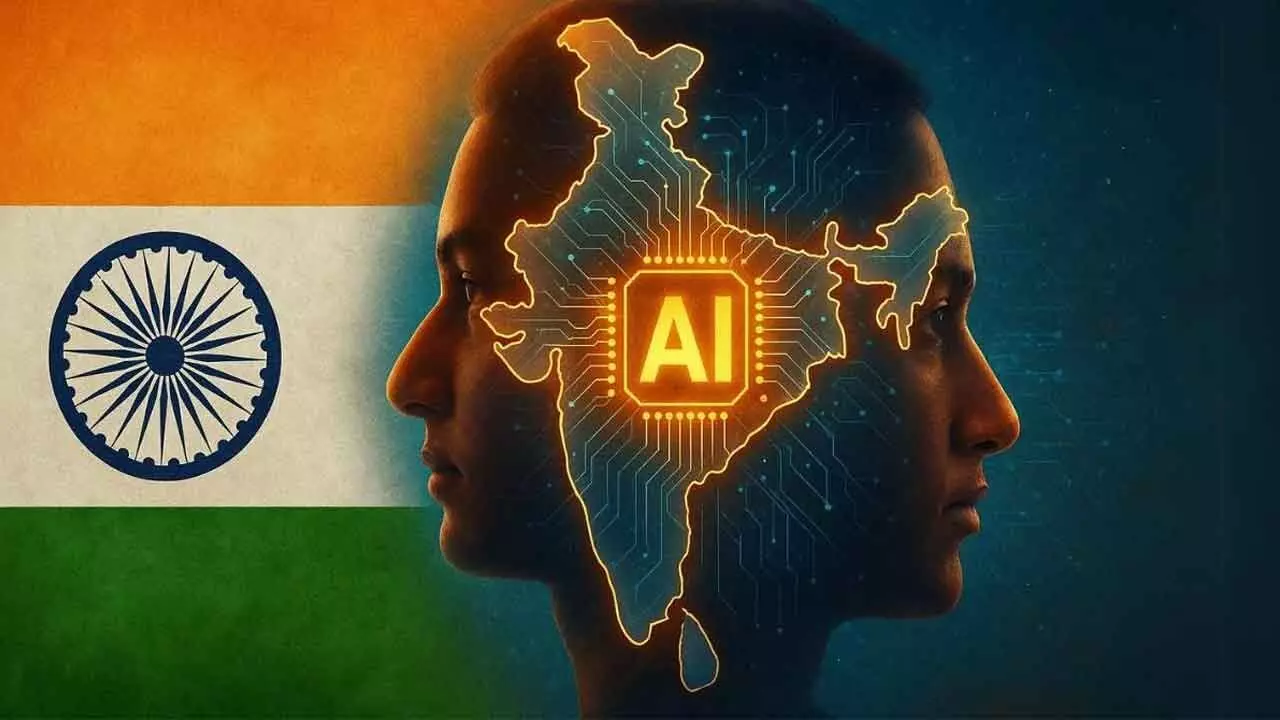

Artificial Intelligence (AI) has emerged as a powerful tool capable of replacing much manual work and transforming specialised areas such as education, healthcare, finance, agriculture, customer engagement, service delivery, and process improvement.
AI applications, software programs leveraging machine learning, natural language processing (NLP), and computer vision, enable automation, analysis, and optimisation of complex tasks, significantly enhancing decision-making across sectors.
AI’s impact is particularly significant in agriculture, including improvements in seed and soil productivity, climate predictiveness, and climate-risk management. AI assistants are increasingly used for fraud detection, while generative AI tools such as ChatGPT are being extensively adopted for productive and knowledge-based use.
However, alongside its benefits, AI also poses risks if misused for illegal or harmful activities. Therefore, ethical use of AI is critical.
AI systems must be transparent, built on strong data foundations, free from bias, and supported by robust analytical frameworks. Models must be thoroughly vetted, with clearly articulated assumptions and sound methodologies, ensuring reliability, assurance, and trust in decision support outcomes.
When AI systems are deployed in public-facing decision-making, particularly in sectors like health, education, and public services, they must be error-free, fair, and devoid of ambiguity.
Decisions should not cause harm or lead to grievances due to perceived unfairness. Recognising these risks, governments and regulators worldwide are taking proactive measures to ensure AI is used for public and social good.
Proper documentation, fairness in design, transparency in governance, and ethical development are now foundational principles.
AI must also be developed in multiple languages, with widespread awareness of how ethical and productive use of AI can bring qualitative improvements across societies.
In this context, the India AI Impact Summit 2026, held from 16 February onwards, marks a significant milestone for India. The summit has attracted global leaders, domestic stakeholders, and leading AI companies, reinforcing India’s ambition to democratise AI and promote its use for global good, particularly for the Global South.
The summit is anchored on three guiding Sutras: People, Planet, and Progress. These principles emphasise that AI must serve humanity in all its diversity, preserve dignity, ensure inclusivity, align innovation with environmental sustainability, and equitably distribute benefits to advance global development and prosperity.
Seven thematic Chakras translate these Sutras into actionable areas for multilateral cooperation, including human capital development, inclusion for social empowerment, safe and transparent AI, trusted science-based systems, resilience, innovation, efficiency, and democratised AI resources for economic development and social good. India’s framework reflects a holistic approach aimed at measurable global outcomes through cooperation.
The theme of the summit SarvajanHitay' (welfare of all) and 'Sarvajan Sukhay' (happiness of all)
captures its essence. India seeks to position itself as a global leader in AI by envisioning a future where AI advances humanity, fosters inclusive growth, and safeguards the planet.
In his address at the India AI Impact Summit on February 19, 2026, Prime Minister Narendra Modi stated, among other points, “Today, the journey from machine learning to learning machines is faster, deeper, and broader. Therefore, our vision must be equally expansive and our responsibility equally profound.”
He further said, “The real question is not what artificial intelligence can do in the future, but what we choose to do with it today.” He cautioned that AI is a transformative power and, if directionless, can be disruptive.
He emphasised human-centric AI rather than machine-centric AI, sensitive and responsible use rather than reckless application, and stressed that the core purpose of the summit is responsible, inclusive, and democratised AI rather than AI being a privilege of a few.
The Prime Minister also presented India’s vision for AI—AI-M.A.N.A.V. (MANAV), meaning human. The MANAV vision stands for M – Moral and Ethical Systems, A – Accountable Governance, N – National Sovereignty, A – Accessible and Inclusive, and V – Valid and Legitimate. India’s MANAV vision will be a vital link for human welfare in the AI-driven world of the 21st century.
While this vision sets a benchmark for a global approach to AI that is human-centric, ethical, inclusive, sovereign, verifiable, and transparent, it requires full global cooperation and a shared understanding among all stakeholders.
Although AI usage is a business proposition, it must ensure societal betterment, productivity and efficiency improvement, and value enhancement rather than destruction. AI must be easily accessible and used for empowered and inclusive growth, with its development and usage governed by transparent rules and robust oversight.
The AI Impact Summit was attended by over 110 countries, with global leaders such as Prime Minister Narendra Modi, French President Emmanuel Macron, and UN Secretary-General Antonio Guterres, as well as the world’s top AI companies.
The MANAV vision was well received, and India’s effort to secure a New Delhi Declaration at the summit has been successful, with more than 80 countries having signed it. According to Union Minister for IT Ashwini Vaishnav, all major countries have already signed.
The New Delhi AI Summit Declaration has now been endorsed by 88 countries and international organisations, including the US, UK, China, and France, reflecting a broad global consensus on responsible AI development and deployment.
The key points covered include democratising AI resources, leveraging AI for economic growth and social good, ensuring secure and trusted AI systems, expanding AI’s role in science, enhancing access for social empowerment, developing human capital, and promoting resilient, efficient, and energy-efficient AI infrastructure.
This is an important first step towards ethical, socially inclusive, and democratised AI development and usage.
However, its impact will depend on effective implementation and follow-through by the signatory countries. It is gratifying to note that India organised a high-impact, well-attended summit with extensive discussions and a strong declaration.
Other key achievements include investment commitments of approximately $250 billion in AI infrastructure, India joining the US-led Pax Silica coalition to enhance supply-chain resilience, and the announcement of several partnerships, including collaborations between global technology leaders and Indian companies.
The focus on human-centric AI for social good and equitable access to AI resources was central to the summit, through which India communicated its MANAV vision powerfully.
India has a key share in services exports, mainly IT services. There is debate on whether rapid AI progress globally, particularly in the US and China, will impact the future growth of IT services companies.
Global AI-powered companies such as NVIDIA, with a market capitalisation of about $4.5 trillion and AI investments of $130.5 billion in 2024; Alphabet, with a market capitalisation of $3.9 trillion and planned AI capital expenditure of $175–185 billion for 2026; and Microsoft, with a market capitalisation of about $3 trillion and heavy investment in OpenAI, illustrate the scale of global AI investments.
Similarly, companies such as Amazon, Meta Platforms, Oracle, CoreWeave, Micron Technology, and Applied Materials are making substantial AI-related investments.
It is therefore necessary for Indian IT companies to focus on leveraging AI to drive growth, innovation, and competitiveness.
Suggested steps include developing AI-powered, industry-specific solutions for healthcare, finance, and manufacturing; offering consultancy services to help clients adopt and integrate AI technologies; urgently upskilling the workforce in AI, machine learning, and data science; collaborating with cloud providers such as AWS, Microsoft, and Google; and partnering with innovative AI startups to access new technologies.
Both the central and state governments, along with private sector participation, should develop a robust ecosystem for the meaningful and purposeful development and widespread adoption of indigenous AI technologies.
This will enable inclusive, empowered, accelerated, equitable, socially sustainable, and transformative development in India.
(The author is former Chairman & Managing Director of Indian Overseas Bank)





